Source UV Sterilisation Water Filter Purifier for Industry Pools
Find 30 UV Sterilisation Water Filter Purifier options with capacities from 0.5gpm to 22gpm and materials like SS304 or SS316. Buyers can compare models, certifications, and prices to select the right system for industrial, swimming pool, or general water treatment needs.
Key considerations
Products List


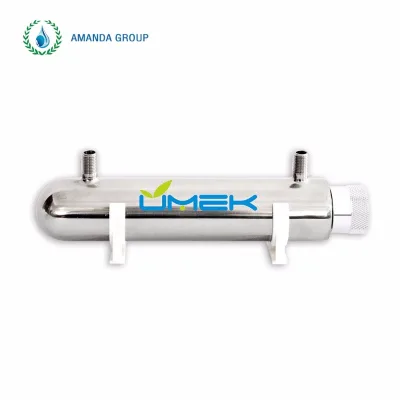


New Design Water Purifier Using UV Water Sterilizer
$9.50 - $12.00
MOQ: 50 Pieces
Jiangsu Shenxing Photoelectricity Medical Apparatus Co., Ltd.


Comprehensive Sourcing Guide
Strategic Sourcing Guide for UV Sterilisation Water Filter Purifiers
The global demand for advanced water treatment solutions has elevated the UV Sterilisation Water Filter Purifier to a critical component in both industrial and municipal infrastructure. As buyers navigate a complex supply chain, particularly one dominated by manufacturing hubs in China, the ability to distinguish between generic listings and verified, high-performance systems becomes paramount. This guide provides a disciplined approach to sourcing these systems, focusing on technical specifications, compliance verification, and long-term operational reliability. By adhering to evidence-based criteria, procurement teams can mitigate risks associated with underperforming equipment and ensure that the selected units meet rigorous sanitation standards.
Technical Specifications and System Architecture
Understanding the core technical architecture of a UV water purification system is the first step in any procurement process. The fundamental mechanism relies on ultraviolet light, specifically UVC rays, to disrupt the DNA of microorganisms, rendering them unable to reproduce. When evaluating potential suppliers, buyers must scrutinize the specific wavelength and power output, as these directly correlate with the system's efficacy. Available data indicates that effective systems often operate within a wavelength range of 200 to 280 nanometers, though some specifications list broader ranges such as 400-10nm which require careful verification against actual emission spectra.
The physical construction of the reactor is equally critical. The housing material must be corrosion-resistant to withstand continuous water exposure and varying chemical environments. Stainless steel grades SS304 and SS316 are the industry standards for these reactors, with SS316 offering superior resistance in high-chlorine or saline environments. The flow capacity, measured in gallons per minute (gpm) or liters per hour, dictates the system's suitability for specific applications. Sourcing options range from small-scale units with capacities around 0.5 gpm to large industrial systems capable of handling up to 22 gpm.
Electrical specifications also vary significantly based on the target market and application. Systems are frequently designed for dual voltage compatibility, supporting both 110V and 220V electrical inputs to accommodate international deployment. The ballast, which regulates the power to the UV lamp, is a vital component; verified units often carry CE certification for the ballast, ensuring electrical safety and stability. The lamp itself is the heart of the system, with service life typically ranging around 8,000 hours. Buyers should verify the lamp's origin, as some supply chains distinguish between lamps manufactured in the USA and those produced in China, which can impact longevity and replacement part availability.
Compliance and Certification Verification
In the realm of water treatment, regulatory compliance is not merely a formality but a prerequisite for safety and market access. When sourcing UV sterilisation units, buyers must demand proof of certification from recognized international bodies. The CE mark is a common requirement, indicating conformity with health, safety, and environmental protection standards for products sold within the European Economic Area. Additionally, ISO certifications, such as ISO 9001 for quality management, provide assurance that the manufacturer adheres to consistent production standards.
RoHS (Restriction of Hazardous Substances) compliance is another critical factor, ensuring that the electronic components and materials used in the unit do not contain restricted hazardous substances like lead or mercury. While some product listings may claim "CE; ISO" or "CE, RoHS, ISO" certifications, buyers must request the actual certificate documents to verify their validity and scope. It is important to note that certifications are often product-specific; a certification for a ballast does not automatically cover the entire system.
Furthermore, the sterilization rate claimed by suppliers must be backed by third-party testing. High-confidence data suggests that effective UV systems achieve a sterilization rate of 99% to 99.99% against common pathogens. However, these figures are contingent on water clarity and flow rate. Buyers should insist on a machinery test report provided by the supplier, which documents the actual performance of the unit under controlled conditions. Without this documentation, claims of "Excellent" product performance remain unverified assertions rather than proven facts.
Cost Drivers and Pricing Dynamics
The pricing of UV water purification systems is influenced by a complex matrix of factors, including material quality, flow capacity, and the sophistication of the control systems. The observed market price range for these units is broad, spanning from approximately $8 to $6,000 USD. This variance reflects the difference between simple, low-flow residential units and robust, industrial-grade systems with advanced automation.
Material costs are a primary driver. Systems constructed with SS316 stainless steel will inherently cost more than those using SS304 due to the higher material expense and manufacturing complexity. Similarly, the power rating of the system, ranging from 55 watts to 0.75 kilowatts, directly impacts the cost of the lamp, ballast, and electrical components. High-power industrial units require more robust cooling systems and larger reactors, further increasing the price.
The Minimum Order Quantity (MOQ) also plays a significant role in the total cost of ownership. Suppliers may offer flexible MOQs ranging from 1 unit for sample orders to 200 units for bulk procurement. Buyers should be aware that while a single unit might have a higher per-unit cost, bulk orders often unlock significant discounts. Additionally, the origin of the product, typically the Hebei region in China Mainland, influences logistics costs and lead times. Buyers must factor in the production cycle, which can be as short as 5 days for standard models, but may extend for customized configurations.
Typical Applications and Operational Context
UV sterilisation water filters are versatile and serve a wide array of applications, from small-scale residential use to large industrial processes. The specific application dictates the required specifications. For instance, swimming pool applications require systems capable of handling high flow rates and potentially higher chlorine levels, necessitating SS316 construction and robust UV lamps. Industrial applications, on the other hand, may involve treating process water for manufacturing, where water temperature and pressure are critical variables.
The operating environment imposes strict constraints on the equipment. The water temperature range for most UV systems is typically between 5°C and 50°C. Exceeding these limits can damage the quartz sleeve or reduce the efficiency of the UV lamp. Similarly, the operating pressure, often cited between 3 to 5 psi (or approximately 0.2 to 0.35 bar), must be maintained to ensure proper flow through the reactor. Systems designed for "stream" processing or automatic control modes are ideal for applications requiring continuous, unattended operation.
The productivity of the unit, measured in liters per hour, must align with the facility's demand. A system with a productivity of 2000L/Hour is suitable for medium-sized commercial facilities, while larger plants may require multiple units or higher-capacity models. Understanding the specific water quality parameters, such as turbidity and iron content, is also essential, as these factors can shield microorganisms from UV light, reducing the system's effectiveness.
Supplier Evaluation and Quality Control
Selecting the right supplier requires a rigorous evaluation process that goes beyond price comparisons. Buyers should prioritize suppliers who provide detailed machinery test reports and clear documentation of their production capabilities. The "Made in China" origin is common, but the specific location, such as Hebei, can indicate the concentration of manufacturing expertise in the region. Suppliers should be transparent about their core components, particularly the UV lamp, which is the most critical part of the system.
Quality control measures should be a central part of the supplier evaluation. Buyers must verify that the manufacturer has established processes to ensure consistency in the welding of stainless steel reactors and the calibration of electrical components. The presence of a "1 Year" or "2 Years" warranty on the UV lamp is a standard indicator of supplier confidence, though the specific terms should be clearly defined. It is also crucial to check the packing specifications; units should be securely packed in cartons or on pallets to prevent damage during transit.
When evaluating potential partners, buyers should assess the supplier's ability to provide customization. Many suppliers offer options for customizing inlet/outlet sizes, which range from 0.5 inches to 1.5 inches, to fit existing piping infrastructure. The availability of spare parts, such as replacement lamps and quartz sleeves, is another key indicator of long-term viability. A supplier that can provide a machinery test report and has a track record of delivering units with "Excellent" performance is more likely to be a reliable partner.
Long-Term Procurement Considerations
Sourcing a UV water purification system is an investment that extends beyond the initial purchase price. Long-term considerations include maintenance requirements, energy efficiency, and the availability of replacement parts. The service life of the UV lamp, typically around 8,000 hours, necessitates a proactive replacement schedule to maintain sterilization efficacy. Buyers should calculate the total cost of ownership, including the cost of annual lamp replacements and energy consumption.
The control mode of the system, whether automatic or manual, impacts operational efficiency. Automatic systems with built-in sensors can monitor UV intensity and alert operators when maintenance is required, reducing the risk of system failure. Additionally, the warranty terms, which may vary from 1 to 2 years, should be clearly understood. A longer warranty period often reflects higher manufacturing standards and better quality control.
Finally, buyers must consider the scalability of the solution. As water treatment needs grow, the ability to add additional units or upgrade existing systems is crucial. Suppliers that offer modular designs and flexible capacity options provide greater long-term value. By focusing on these long-term factors, procurement teams can ensure that their investment in UV sterilisation technology remains effective and reliable for years to come.
Comparative Analysis of Key System Attributes
To facilitate a clearer understanding of the market landscape, the following table summarizes the key attributes observed in the current supply of UV water purification systems. This comparison highlights the variability in specifications and helps buyers identify the features most relevant to their specific needs.
| Attribute | Observed Range / Options | Critical Verification Point |
|---|---|---|
| Material | SS304, SS316, 304 | Verify grade for corrosion resistance based on water chemistry. |
| Capacity | 0.5 gpm to 22 gpm | Match flow rate to peak demand of the facility. |
| Voltage | 110V, 220V | Ensure compatibility with local power grid standards. |
| Sterilization Rate | 99% to ≥99.99% | Request third-party test reports for validation. |
| Warranty | 1 Year, 2 Years | Clarify coverage scope for lamp vs. system components. |
| Certification | CE, ISO, RoHS | Verify validity of certificates for specific product models. |
| Lamp Origin | Made in USA, Made in China | Assess impact on replacement part availability and cost. |
| Operating Temp | 5-50°C | Confirm system suitability for local water temperature conditions. |
| Control Mode | Automatic | Evaluate need for remote monitoring or manual intervention. |
| Production Cycle | 5 Days | Factor into lead time planning for project schedules. |
This structured approach to sourcing ensures that buyers make informed decisions based on verified data rather than marketing claims. By rigorously applying these criteria, organizations can secure UV sterilisation systems that deliver consistent, high-quality water treatment results.
FAQs
What certifications do these UV water purifiers hold?
The systems typically hold CE, ISO, and RoHS certifications. Buyers must verify specific documents for ballast and entire units, as certifications are product-specific and do not automatically cover all components.
Which materials are used for the reactor housing?
Reactors are constructed from SS304 or SS316 stainless steel. SS316 offers superior corrosion resistance for high-chlorine or saline environments compared to the standard SS304 grade.
How does the sterilization rate compare across models?
Effective units achieve a sterilization rate of 99% to 99.99% against pathogens. This performance depends on water clarity and flow rate, requiring third-party machinery test reports for verification.
Can the system operate on different voltage inputs?
Yes, the equipment supports both 110V and 220V electrical inputs. This dual voltage compatibility allows for international deployment across various regional power standards without additional converters.
What is the typical service life of the UV lamp?
The UV lamp has a service life of approximately 8,000 hours. Buyers should plan for proactive replacement schedules to maintain sterilization efficacy and prevent system failure.
Which applications are suitable for this water treatment system?
These units are designed for swimming pools, industrial processes, and general water treatment. Specific applications dictate required flow rates and material grades like SS316 for harsh chemical environments.
What is the production cycle for custom orders?
The standard production cycle is 5 days for regular models. Customized configurations may require extended lead times, and buyers should confirm specific timelines before placing bulk orders.